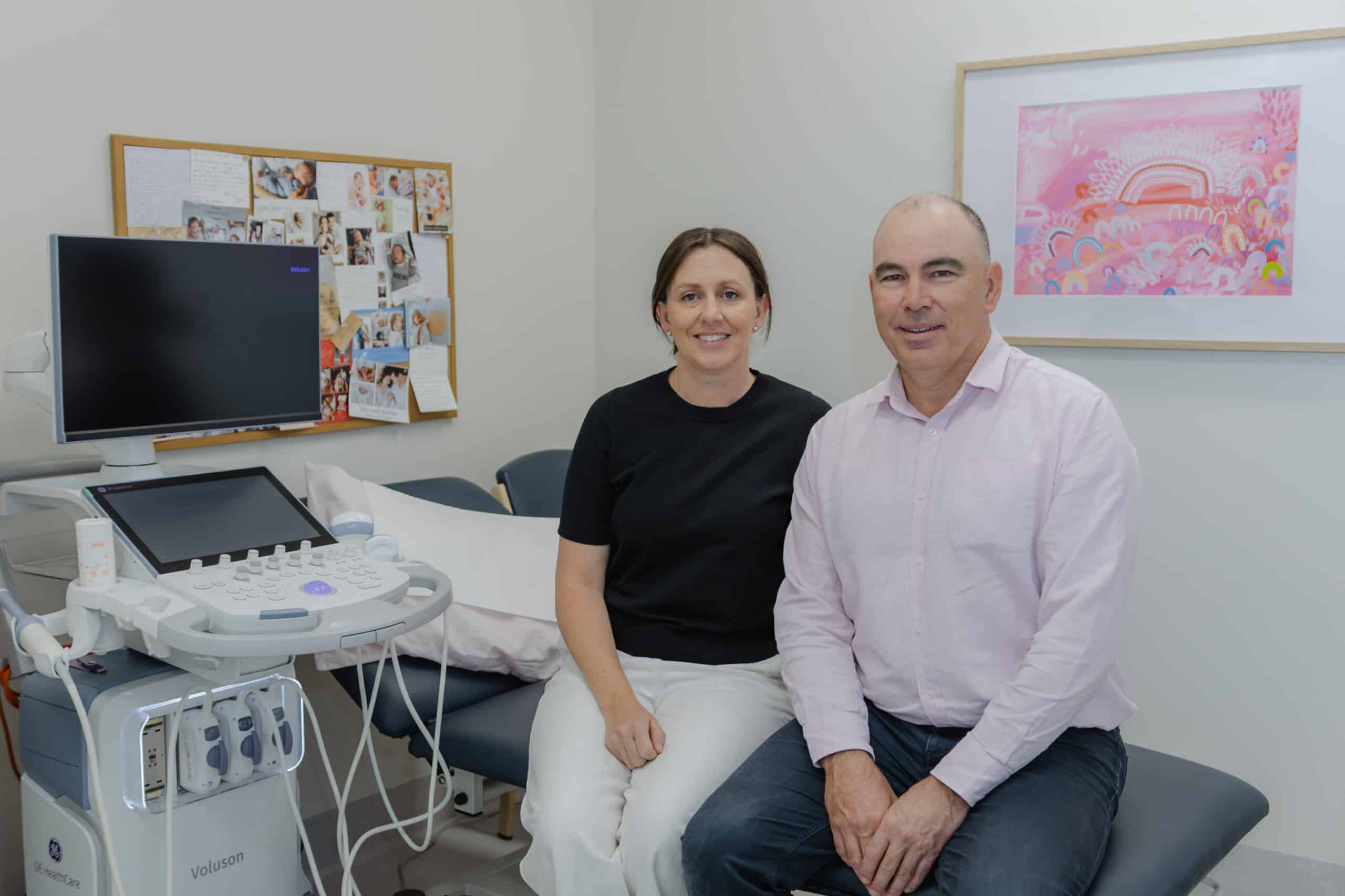
Women’s & Fetal Ultrasound
Gynaecological and pregnancy ultrasounds performed with care, giving you and your doctor a clearer picture of your health.
We provide specialised women’s health & fetal ultrasound services via our experienced women’s health and obstetric sonographers, and Dr Carl Henman, obstetric GP and fetal sonologist. Dr Henman performs and/or reports on your scans and communicates the results with your referrer, allowing high-quality point of care support.
If the unfortunate situation should arise where your pregnancy is regarded as high-risk, or your baby is suspected of having an abnormality, Dr Henman has established relationships with multiple tertiary fetal medicine units. Hence you can keep a local presence in your journey even if you are referred to a larger centre for further management.
Ultrasound services
Ultrasound services provided or reported by Dr Henman include:
- Any pregnancy related scan:
- Common assessments include dating scans, first trimester (11-14 week) screening, mid-pregnancy scan (20-22 weeks), growth scans (34-36 weeks)
- Detailed scanning and reporting for suspected pregnancy or fetal complications.
- More frequent assessments are also provided for those women having twins.
- Any female pelvic ultrasound:
- Indications for this may include endometriosis, ovarian cysts, pelvic pain, abnormal bleeding or painful intercourse.
- Follicle tracking and endometrial thickness assessment when required for assistive reproductive processes.
A current referral is required, and Medicare rebates may be applicable.
HyCoSy
A HyCoSy scan is a special ultrasound test that images the cavity of the uterus (womb) and the fallopian tubes. It is usually requested in women that are having trouble falling pregnant to identify any anatomical abnormalities.
The test usually involves the following steps:
- A urine test to ensure you’re not pregnant and don’t have a urinary tract infection
- An internal (transvaginal) ultrasound is done first to assess the pelvic organs. The ultrasound probe is then removed temporarily
- Insertion of a speculum into your vagina (like when you have Pap smear)
- A catheter (small tube) is passed through your cervix into the uterus
- The speculum is taken out and the transvaginal ultrasound probe re-inserted
- A small amount of fluid (sterile salty water) is mixed with air & pushed through the catheter into the uterus and fallopian tubes, making them much easier to see
- A series of ultrasound pictures and videos are taken
- Ultrasound probe and catheter removed
There are risks associated with any procedure. The main, unlikely, risks associated with a HyCoSy are:
- Infection
- Discomfort > moderate pain
- The expulsion of an unknown pregnancy (this would only occur if the pregnancy was so early as to not have been detected by the urine test)
Deep Infiltrative Endometriosis (DIE) Scan
Endometriosis is a common medical condition that affects about 10% of women.
It is a condition where tissue similar to the lining of your uterus (endometrium) grows in other areas including the ovaries, muscle of the uterus (adenomyosis), or in other parts of your pelvis.
The endometrium is the layer of tissue that grows and is shed each month during your menstrual cycle.
When the abnormal endometrial tissue breaks down, it subsequently causes chocolate cysts (endometriomas), heavy and painful bleeding, chronic pain and possibly infertility.
There are 2 types of endometriosis:
- Superficial lesions
- Deep Infiltrating Endometriosis
The majority of cases involved superficial lesions on the lining of your pelvic tissues or within ovaries (ovarian endometriomas) and if these do not cause you any symptoms, you do not require any treatment, although we do recommend monitoring the condition with a pelvic ultrasound.
However, Deep Infiltrating Endometriosis is when the endometriotic lesions infiltrate your bowel, bladder, ureter, cervix and vaginal tissue, causing adhesions and obstruction in the pelvis, which may or may not cause you symptoms.
A Pelvic Ultrasound may identify lesions/cysts, however to detect severe deeply infiltrating endometriosis, we recommended a Deep Infiltrative Endometriosis Scan.
Who should have a DIE scan?
- Anyone who is experiencing symptoms suggestive of severe endometriosis
- Pre-operatively to help plan prior to a laparoscopy
- Those monitoring their known severe endometriosis, and possibly under medication for this
- Those experiencing unexplained infertility or recurrent failures
Common Endometriosis Symptoms
- Significant and recurring period pain
- Period pain that often worsens over time
- Abnormal bowel or urinary symptoms related to the period
- Pre-menstrual or mid-cycle spotting
- Occasionally a symptom of endometriosis can be painful intercourse
What to expect?
- Prior to your DIE scan, we simply ask that you arrive with a comfortably full bladder.
- The results of the ultrasound will be discussed with you whilst being scanned, and a detailed ultrasound report will be provided.
Our Clinicians
Dr Carl Henman
Director | Obstetric GP and Fetal Sonologist
Simone Francis
Women’s Health and Obstetric Sonographer
Jacqueline McDonald
Women’s Health and Obstetric Sonographer
Jess Talbot
Women’s Health and Obstetric Sonographer
Jess Hodges
Women’s Health and Obstetric Sonographer
Your health, supported at every stage.
From your first appointment through every stage that follows, our doctors, midwives and allied health team are here to support you.